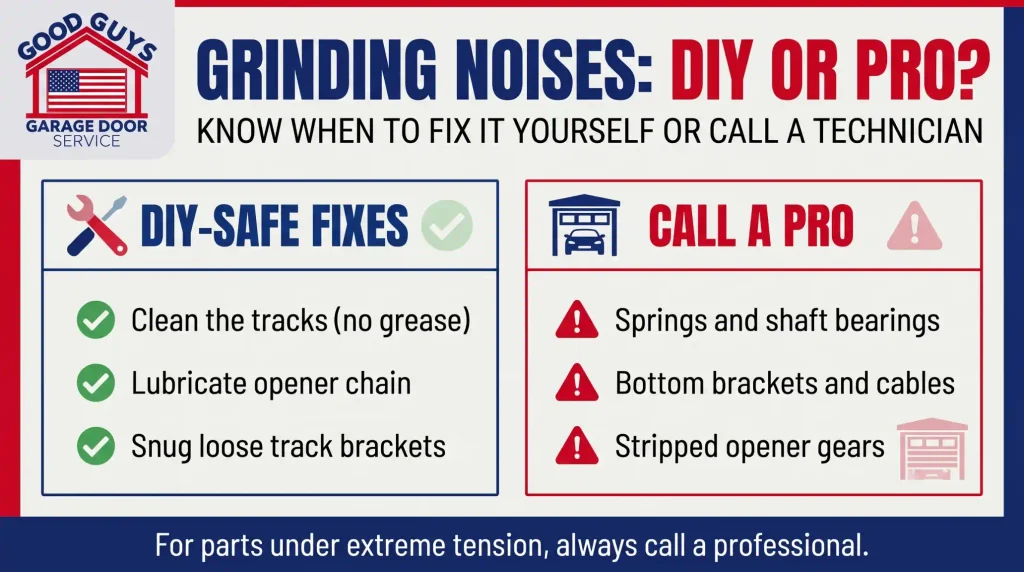
A grinding noise means something that should roll or turn is dragging instead. The six usual causes are worn roller bearings, a stripped gear inside the opener, bent or misaligned tracks, dirt and old grease in the tracks, a dry or worn opener chain or screw drive, and worn bearings or cables above the door. To narrow it down, pull the emergency release with the door closed and lift the door by hand. If the grinding stops, it’s the opener. If it keeps going, it’s the door. Rollers and dirty tracks are usually DIY fixes. Springs, cables, and shaft bearings are not.
Key Takeaways
- Worn roller bearings are the most common cause of grinding. Nylon rollers with sealed bearings are the quiet fix.
- An opener that grinds but won’t move the door usually has a stripped drive gear.
- Where you hear it tells you where to look. Grinding along the sides points to rollers or tracks, above the door points to the spring system, and at the ceiling motor points to the opener.
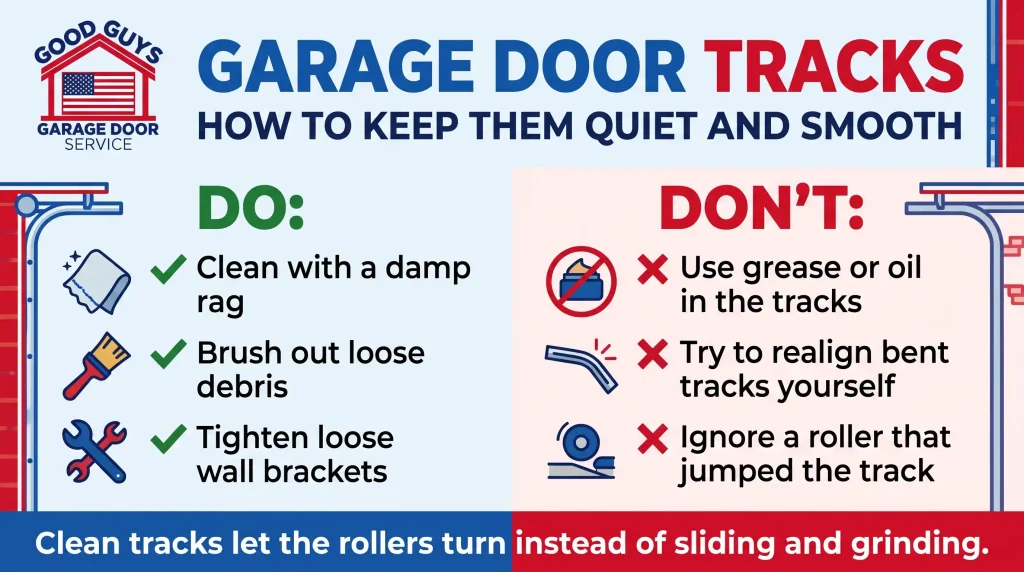
- Clean the tracks, but never grease them. Lubricant in the tracks collects grit and makes grinding worse.
- An unbalanced door wears out rollers and opener gears faster, so check the balance whenever you fix a grinding noise.
- Springs, cables, shaft bearings, and bottom brackets are pro-only repairs. They hold the door’s weight under high tension.
First, Find the Source: Door or Opener?
How to tell if a grinding noise is the garage door or the opener
Before you fix anything, take 30 seconds to find out whether the grinding comes from the door or the opener. Grinding is one of the nine sounds we break down in What Causes a Noisy Garage Door? 9 Sounds and What Each One Means, and it’s the one where the source matters most.
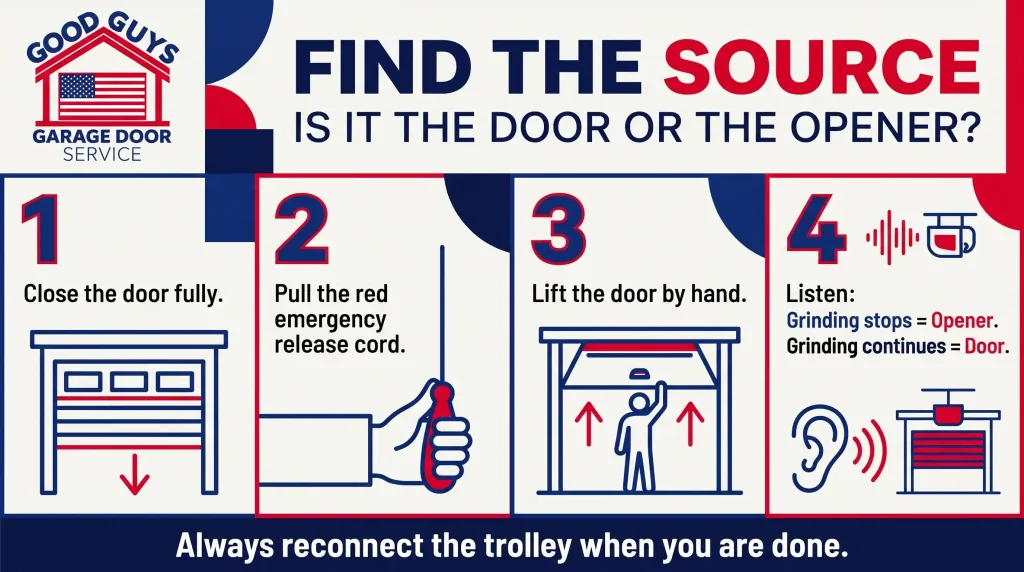
- Close the door fully.
- Pull the red emergency release cord to disconnect the door from the opener.
- Lift the door a few feet by hand and listen.
- If the grinding stops, the opener is the source (causes #2 and #5).
- If it keeps going, it’s the door (causes #1, #3, #4, and #6).
- If the door feels extremely heavy, lower it and stop. That points to a spring problem.
- Lower the door and reconnect the trolley the way your opener’s manual describes.
Listen for where the sound comes from, too. Grinding along the sides points to rollers or tracks. Grinding from the shaft above the door opening points to the spring system. Grinding from the motor unit on the ceiling points to the opener.
1. Worn or Seized Roller Bearings
Why garage door rollers grind and how to fix them
Steel rollers spin on small ball bearings. When those bearings wear out, rust, or seize, the roller stops turning and slides along the track, grinding metal on metal. It’s the most common grinding complaint we see.
Symptom: A rough grinding sound along the whole trip, often with some shaking. You may notice shiny wear marks inside the track, or rollers that slide instead of turn.
Most likely cause: Worn or seized bearings on steel rollers, flat spots worn into the wheels, or rust from a damp garage.
How to fix it:
- Watch each roller while someone opens the door. A roller that slides instead of turning, wobbles, or has flat spots is the culprit.
- If a steel roller is just dry, lubricate its bearing. If it feels rough or won’t turn, replace it.
- Replace worn upper rollers one at a time, using the steps in “How to Replace Worn Garage Door Rollers Safely” below.
- Upgrade to nylon rollers with sealed ball bearings for a quieter, longer-lasting door.
Call a pro if: the worn rollers are in the bottom brackets, a roller has come out of the track, or most of the rollers need replacing.
If your rollers are still at the squeaking stage instead of grinding, a round of lubrication may be all they need. Why Does My Garage Door Squeak? 7 Causes and How to Lubricate It the Right Way walks through it part by part.
2. A Stripped Opener Drive Gear
Why your garage door opener grinds but the door doesn’t move
If the motor runs and grinds but the chain or belt barely moves, the drive gear inside the opener has likely stripped. Many openers use a nylon or plastic drive gear that wears down over the years. It wears faster when the door is out of balance and the opener has to do the springs’ job.
Symptom: A grinding or whirring sound from the motor unit on the ceiling while the door stays put or moves in jerks. Some homeowners also find white plastic shavings under the opener.
Most likely cause: A stripped drive gear or sprocket, often after years of lifting a door that isn’t properly balanced.
How to fix it:
- Confirm it’s the opener with the release test above.
- Check the door’s balance. With the door closed and disconnected, lift it about halfway and let go.
- A balanced door stays put.
- If it drifts down or shoots up, the springs need attention first. Otherwise, a new gear will just strip again.
- Replacement gear kits exist for many models, but the job means opening the motor head. For most homeowners, it’s a job for a pro.
Call a pro if:
- The door fails the balance test.
- The gear is stripped.
- The opener is well over a decade old, in which case replacing it may be the better value.
If a stripped gear has left you with a door that won’t move at all, our guide to the 10 most common reasons a garage door won’t work covers the other likely culprits.
3. Bent or Misaligned Tracks
How to fix a garage door grinding against a bent track
If the rollers are grinding against the sides of the track, the track is probably bent, loose, or out of line. A bump from a car, a loose bracket, or years of vibration can shift it just enough to rub.
Symptom: Grinding or scraping at the same spot on every trip, often with a jerk or hesitation there. The gap between the rollers and the track may look different from one section to the next.
Most likely cause: A dent or kink from an impact, loose track brackets, or a track that has shifted out of plumb.
How to fix it:
- Close the door and unplug the opener.
- Sight down each vertical track for dents or kinks.
- Check the brackets that fasten the tracks to the wall, and snug any loose bolts.
- Don’t loosen the brackets to realign the track yourself. A small adjustment in the wrong place can throw off the whole door.
Call a pro if: a track is dented or kinked, a roller has jumped out of the track, or the door hangs crooked. If a roller has popped out and the door is hanging at an angle, stop using it and keep everyone clear. That’s a situation for emergency garage door repair, because a door that’s off its track can fall.
A track that pinches the rollers can also make the door bind hard enough to trip the opener’s safety system. That’s one common cause of a garage door that reverses before closing.
4. Dirt, Debris, and Old Grease in the Tracks
How to clean garage door tracks to stop grinding
Grit, leaves, and hardened grease in the tracks can make perfectly good rollers grind. This is especially common in garages that stay open during yard work, and in doors where someone greased the tracks.
Symptom: A gritty, sandpaper-like grinding along the track, with black buildup visible inside it. It often gets worse in the fall, when leaves and debris blow in.
Most likely cause: Dirt and debris in the tracks, or grease and oil that were applied to the tracks and turned into a gritty paste.
How to fix it:
- Close the door and unplug the opener.
- Brush or vacuum loose debris out of the bottom of each vertical track.
- Wipe the inside of each track with a damp rag. Use a mild degreaser for built-up grease.
- Let the tracks dry, and don’t lubricate them.
The home improvement editors at Bob Vila give the same advice: clean the tracks, but keep lubricant out of them.
Call a pro if: the grinding continues after the tracks are clean. That points back to the rollers or the track alignment.
5. A Dry or Worn Opener Chain, Screw, or Trolley
Why a garage door opener chain or screw drive grinds
On chain-drive and screw-drive openers, a dry chain, a dry screw, or a worn trolley can grind as the door moves. You’ll hear it along the rail, not just at the motor.
Symptom: A grinding or rasping sound that travels along the opener rail with the trolley. The chain may sag or drag, or a screw drive may run rough and jerky.
Most likely cause: A dry chain or sprocket, a screw drive that needs grease, or a worn trolley.
How to fix it:
- Unplug the opener.
- Check your opener’s manual for the right lubricant and how often to apply it. Chain and screw drives often need it, and belt drives don’t.
- Adjust the chain tension using the steps in the manual.
- Look at the trolley for cracks or worn plastic.
Garage door manufacturer Clopay puts a chain drive that sounds like it’s dragging in the call-an-expert category, since it can signal wear inside the opener. If a worn trolley or broken chain has left the door stuck in place, here’s what to do when your garage door is stuck and won’t open.
Call a pro if: the trolley is cracked, the chain keeps loosening, or the grinding continues after lubrication. If noise is your main complaint, a belt-drive opener runs much quieter than a chain.
6. Worn Bearings, Springs, or Cables Above the Door
What a grinding noise above the garage door means
Grinding from the top of the door opening usually comes from the torsion spring system. The likely sources are worn shaft bearings, a spring that’s binding, or a lift cable rubbing where it shouldn’t. This is the one cause on this list that isn’t DIY.
Symptom: A grinding or rasping sound from the metal shaft above the door. You may also see the shaft wobble, a cable that looks frayed or loose on its drum, or a door that lifts unevenly.
Most likely cause: Worn end or center bearings on the spring shaft, spring coils that are binding or broken, or a lift cable fraying against its drum or the track.
What to do:
- Look, but don’t touch.
- If a cable is frayed or has come off its drum, stop using the door and schedule garage door cable repair.
- Leave worn shaft bearings to a pro. Replacing them means working around the springs, which sit under high tension.
If the grinding came with rust on the springs or a door that suddenly feels heavy, read Why Did My Garage Door Make a Loud Bang? 5 Spring Warning Signs You Shouldn’t Ignore before using the door again.
Call a pro: Always.
How to Replace Worn Garage Door Rollers Safely
How to replace garage door rollers without touching the bottom brackets
Replacing upper rollers is a manageable job for a handy homeowner, as long as you leave the bottom rollers alone.
You’ll need:
- New rollers that match the wheel size and stem length of your old ones (most residential doors use 2-inch rollers)
- A socket wrench
Steps:
- Close the door fully and unplug the opener. The door should rest on the floor the entire time.
- Work on one roller at a time, starting with the middle hinges.
- Remove the hinge. Take out the bolts that hold the hinge carrying the worn roller, then slide the old roller out of the hinge.
- Install the new roller. Slip it into the hinge, set the wheel back into the track, and bolt the hinge back in place.
- Handle the top rollers the same way. They sit in adjustable top brackets.
- Snug the bolts without overtightening, since cranking them down can strip the holes in the door.
- Test the door. Run it by hand first, then with the opener, and finish with an auto-reverse test. Lay a 2×4 flat under the door and close it. The door should reverse as soon as it touches the board.
The DIY editors at Family Handyman recommend nylon rollers with sealed bearings for a quieter door. They’re firm that the bottom-bracket rollers on torsion-spring doors should never be removed by a homeowner, since those brackets stay under constant tension.
What Not to DIY
Garage door grinding repairs that need a pro
Some grinding repairs look simple but put you within reach of parts under extreme tension. Leave these to a technician:
- Torsion springs, winding cones, and set screws
- Lift cables and cable drums
- End and center bearings on the spring shaft
- Bottom brackets and bottom rollers
- Straightening or re-hanging bent tracks
- Opener gear replacement, if you’re not comfortable working inside the motor head
The Door & Access Systems Manufacturers Association (DASMA) is clear that spring systems should be repaired only by trained technicians. It also says extension springs should always have safety cables running through them.
If the grinding turns out to be a spring that has already snapped, the door needs broken garage door spring repair before it moves again.
Garage Door Grinding Noise Chart: Where It’s Coming From and What to Do
If this chart points to several worn parts at once on an older door, weigh the repair against the average lifespan of a garage door. When replacement makes more sense, a new custom garage door lets you start fresh with quieter hardware.
| Where you hear it | Most likely cause | DIY-safe fix | Call a pro when |
| Along the sides, the whole trip | Worn or seized roller bearings | Replace upper rollers, switch to nylon | Bottom rollers or most rollers are worn |
| At one spot on the track | Bent or misaligned track | Snug loose track bracket bolts | The track is dented, or a roller left the track |
| Along the track, gritty | Dirt or grease in the tracks | Clean the tracks, don’t lubricate them | Grinding continues after cleaning |
| At the ceiling motor unit | Stripped drive gear | Check the door’s balance | The gear is stripped, or the door is out of balance |
| Along the opener rail | Dry or worn chain, screw, or trolley | Lubricate per the manual, adjust the chain | The trolley is cracked, or the chain keeps loosening |
| Above the door opening | Shaft bearings, springs, or cables | Look, but don’t touch | Always |
Stop the Grinding Before It Wears Out More Parts
A grinding garage door is telling you something is wearing out, and the longer it grinds, the more parts it takes with it. Start with the release test to find out whether it’s the door or the opener. Then clean the tracks and replace worn rollers. Anything above the door, including springs, cables, and shaft bearings, belongs with a pro.
Good Guys Garage Door Service is a veteran-owned, residential-only garage door company based in Marlboro Township. We handle roller replacement and opener repair for homeowners across Monmouth County, including Freehold, Howell, and Middletown, plus nearby East Brunswick. You’ll get a clear price before any work begins, and same-day service is available when you need it. Veterans and seniors get 10% off. Whoever you hire, confirm they’re registered in New Jersey, and be wary of cheap garage door repair ad scams.
Book a free estimate for your grinding garage door or call (732) 299-3428, Monday through Saturday, 8 AM to 6 PM.