
Most garage doors stop working for one of ten reasons, and the majority are minor: a dead remote battery, a tripped outlet, or safety sensors knocked out of alignment. Start with the simplest checks first. Confirm the opener has power, replace the remote battery, and make sure nothing is blocking the two photo-eye sensors near the floor. If the door still will not move, or if you hear the motor run without the door moving, the problem is usually mechanical (a broken spring, a disengaged trolley, or an off-track door). A broken spring is a job for professional broken garage door spring repair, not a DIY fix, because springs and cables are under extreme tension. And if you are replacing an aging or damaged door entirely, ask about custom garage doors sized and styled to your home. When in doubt, call a licensed technician.
Key Takeaways
- The four most common causes are dead remote batteries, no power at the opener, misaligned safety sensors, and something blocking the tracks. All four are quick to check.
- A door that suddenly feels very heavy or drops fast almost always means a broken spring. Do not try to lift or repair it yourself.
- If the motor runs but the door does not move, the trolley is disengaged (someone pulled the emergency release) or the opener gear is stripped.
- A door that starts to close then reverses is almost always a safety sensor or limit setting issue, not a broken door.
- Springs, cables, and off-track doors are the three repairs that send homeowners to the ER. Leave those to a pro.
- If your door is more than 15 years old and failing repeatedly, repair may cost more than it is worth. See our guide on the average lifespan of a garage door to weigh repair against replacement.
1. The Remote or Keypad Has a Dead Battery or Lost Its Sync
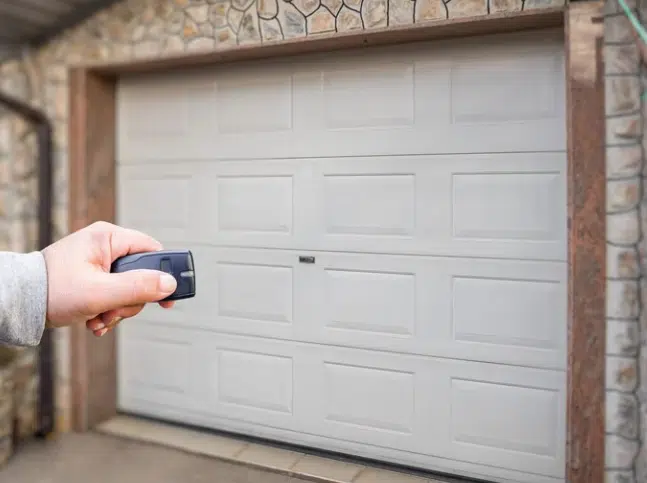
The single most common reason a garage door “stops working” is the remote, not the door. If the wall button opens the door normally but the remote or keypad does not, the door is fine. The problem is the handheld.
How to Fix a Garage Door Remote That Won’t Work
- Replace the battery in the remote (and the keypad, which has its own separate battery).
- Stand closer and try again to rule out a range or interference problem.
- Re-sync the remote: press the “Learn” button on the motor unit, then press the remote button within 30 seconds until the opener lights blink.
- Test the wall button. If the wall button works but the remote still does not, the remote is bad or unsynced.
Call a pro if: neither the remote nor the wall button works after a fresh battery and a re-sync, which points to the opener logic board.
For the full walkthrough, see our cluster guide: Why Won’t My Garage Door Remote Work? 7 Things to Check Before You Call a Tech.
2. The Opener Has Lost Power
If nothing happens at all (no lights, no motor hum), the opener is not getting power. This is the second most common call, and it is often a simple electrical trip rather than a broken opener.
Why Your Garage Door Opener Has No Power
- Check that the opener is plugged in. Vibration and ladders knock these plugs loose more often than you would think.
- Test the outlet with a phone charger or lamp to confirm it is live.
- Reset the GFCI outlet (press the “Reset” button) and check the breaker panel for a tripped breaker.
- If a storm just passed, a power surge may have tripped the unit. Unplug it for 30 seconds and plug it back in.
Call a pro if: the outlet is dead and resetting the breaker does not restore it, which is an electrical issue for an electrician or technician.
3. The Safety Sensors Are Misaligned or Blocked
If the door opens fine but will not close (and the opener light blinks or you hear repeated clicks), the safety sensors are the cause. Federal law requires two photo-eye sensors near the bottom of each track. If they cannot “see” each other, the door will not close, by design.
How to Fix Misaligned Garage Door Safety Sensors
- Look at the two small sensors 4 to 6 inches off the floor on each side. Each has an LED.
- Clear anything in the beam path: a trash can, a broom, a stray leaf, even a spider web.
- Wipe both lenses clean with a soft cloth.
- Gently adjust the sensor brackets until both LEDs glow steady (usually one green, one amber or red depending on brand). A blinking LED means they are still misaligned.
Call a pro if: the LEDs will not go steady after alignment, or a sensor is cracked or water-damaged and needs replacing.
4. Something Is Blocking or Obstructing the Tracks
A door that stops partway, then reverses or stalls, often has a physical obstruction in the track. The opener senses resistance and stops to avoid crushing whatever is in the way.
Why Your Garage Door Stops and Reverses Partway
- Visually inspect both tracks from top to bottom for dents, debris, or a bent section.
- Look for hardened grease, small stones, or a loose bolt sitting in the track.
- Clean the tracks and wipe them down. Do not over-grease them, which attracts more debris.
- Check the rollers are seated in the track and turning freely.
Call a pro if: a track is visibly bent or pulling away from the wall. A misaligned track can send the door off its rails.
5. A Torsion or Extension Spring Is Broken
If the door suddenly feels extremely heavy, will not lift, or dropped fast and hard, a spring has broken. This is one of the most common mechanical failures and one of the most dangerous to touch. Springs counterbalance the entire weight of the door (100 to 300+ pounds) and store enormous tension.
Signs of a Broken Garage Door Spring
- A loud “bang” from the garage, sometimes mistaken for a gunshot, when the spring snaps.
- A visible gap in the tightly-wound spring above the door.
- The opener strains, hums, or lifts the door a few inches then stops.
- The door is crooked or will not stay open on its own.
Call a pro. Always. Do not attempt to unwind, adjust, or replace a spring yourself. This repair has caused serious injuries and deaths. A technician has the tools and training to do it safely. If your door is aging out of reliable service, our homeowner guide to picking a new garage door can help you decide whether to replace it.
6. The Trolley Is Disengaged (Emergency Release Was Pulled)
If the motor runs but the door does not move, the trolley has been disconnected from the opener carriage. Usually someone pulled the red emergency-release cord (often to open the door manually during an outage) and it was never re-engaged.
How to Re-Engage a Garage Door After Pulling the Emergency Release
- With the door fully closed, pull the red release cord toward the door to reset the lever.
- Run the opener once. The trolley should click back onto the carriage and re-engage automatically.
- If it does not, manually move the door until the trolley snaps back into the carriage.
Call a pro if: the trolley will not re-engage or the carriage is cracked, which means a worn opener rail assembly.
7. The Door Is Frozen or Sealed to the Ground
In cold weather, the bottom weather seal can freeze to the concrete, and the opener reads it as an obstruction. The door will not budge, or the opener strains and gives up.
How to Free a Frozen Garage Door
- Do not force it with the opener repeatedly. Repeated straining burns out the motor and can strip the gear.
- Break the ice seal with a heat source (a hair dryer) or by carefully chipping the ice at the base.
- Once free, dry the seal and the floor, and apply a silicone-based lubricant to prevent re-freezing.
Call a pro if: the weather seal is cracked or torn and needs replacing, or the opener stripped its gear from the strain.
8. The Rollers Are Worn or the Door Has Come Off Track
A door that binds, jerks, grinds, or hangs crooked usually has worn rollers or has jumped its track. An off-track door is unsafe to operate because it can fall.
Why Your Garage Door Is Off Track or Grinding
- Worn or seized rollers no longer roll smoothly and drag in the track.
- A snapped cable lets one side drop and the door goes crooked.
- A hard impact (a car bump) knocks the door out of alignment.
Call a pro. Do not operate an off-track door. Cables and off-track panels are under tension and heavy. For a stuck or jammed door, see our cluster guide: Why Is My Garage Door Stuck and Won’t Open? 8 Reasons It Happens.
9. The Limit or Force Settings Are Out of Adjustment
If the door reverses before it fully closes, closes then pops back open, or stops short of open, the opener’s travel-limit or force settings have drifted. These settings tell the opener how far to travel and how much force to use.
How to Fix a Garage Door That Reverses Before Closing
- Rule out the safety sensors first (see Reason 3), since they cause the same symptom.
- Locate the travel-limit adjustment screws or buttons on the motor unit (see your manual).
- Adjust the “down” limit in small increments so the door closes fully without pressing too hard into the floor.
- If the door reverses because it thinks it hit something, the force setting may be too sensitive.
Call a pro if: small adjustments do not fix it, or the door slams or pushes hard into the floor. For the full breakdown of this specific problem, see our cluster guide: Why Does My Garage Door Reverse Before It Closes? 6 Common Causes.
10. The Opener Gear Is Stripped or the Logic Board Has Failed
If the opener hums or runs but the door does not move (and the trolley is engaged), the internal drive gear is likely stripped. If the opener is completely unresponsive after you have confirmed power, the logic board may have failed, often after a power surge or simply from age. A stripped gear can also strain and fray the lift cables, so if you notice a loose or frayed cable, add garage door cable repair to the diagnosis.
Signs Your Garage Door Opener Is Failing
- A grinding or whirring motor with no door movement points to a stripped nylon gear.
- Random behavior (opening on its own, ignoring commands) points to a failing logic board.
- An opener more than 15 years old that fails repeatedly is usually near end of life.
Call a pro if: you suspect a stripped gear or board, or the door is stuck shut and you cannot get your car out. That is when emergency garage door repair is worth the call. A technician can tell you whether a gear-kit repair is worth it or whether a new opener is the smarter spend.
DIY-Safe vs. Call-a-Pro: Quick Reference
| Problem | Safe to DIY? | Why |
| Dead remote or keypad battery | ✅ Yes | Simple battery swap and re-sync |
| No power at the opener | ✅ Yes | Check plug, outlet, GFCI, breaker |
| Misaligned or dirty safety sensors | ✅ Yes | Clean lenses, align brackets |
| Debris or minor obstruction in track | ✅ Yes | Clear and clean the track |
| Frozen weather seal | ✅ Yes | Thaw gently, do not force the opener |
| Disengaged trolley | ✅ Yes | Re-engage the emergency release |
| Travel-limit / force adjustment | ⚠️ Sometimes | Minor tweaks only; stop if it slams |
| Broken spring | ❌ No | Extreme tension, high injury risk |
| Snapped cable | ❌ No | Under tension, door can drop |
| Off-track door | ❌ No | Heavy and unstable, can fall |
| Stripped opener gear / bad logic board | ❌ No | Internal repair, diagnosis needed |
Bottom Line: Start Simple, Then Call a Pro
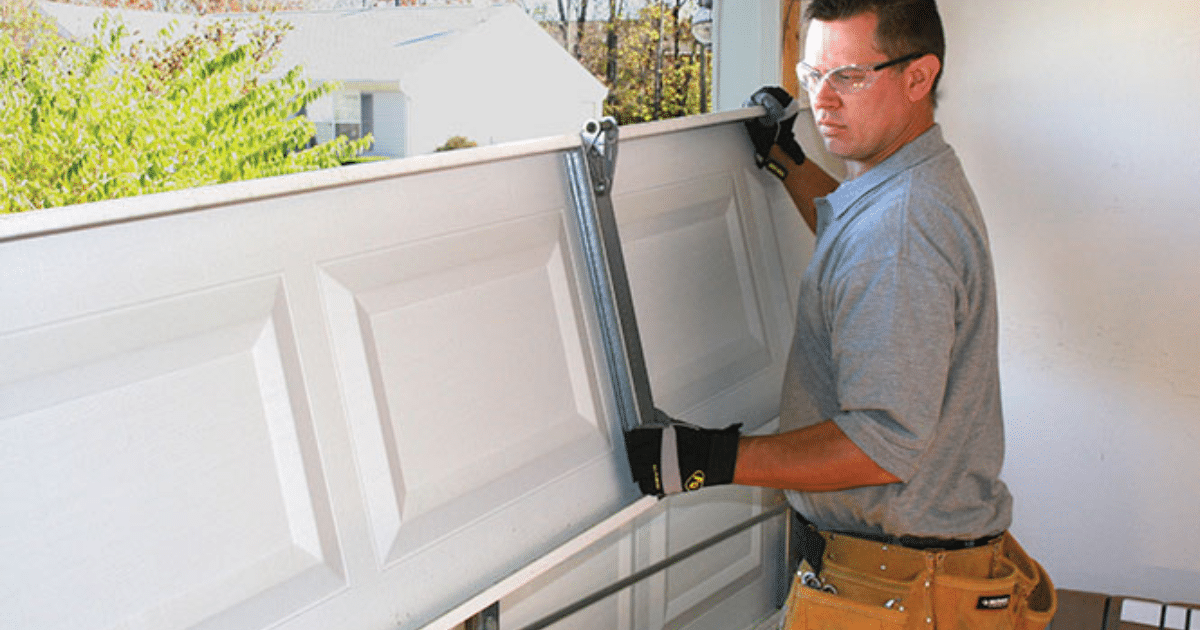
Most of the time a garage door that “stops working” has a simple cause you can fix in a few minutes: a battery, a plug, a sensor, or a clear-the-track job. Work down the list from the easy checks first. But the moment you are dealing with a spring, a cable, or a door off its track, stop. Those repairs are dangerous and are not worth a trip to the ER.
If you have run through these steps and your door still will not cooperate, or you are looking at a spring, cable, or off-track door, Good Guys Garage Door Service can help. Book a same-day repair or request a free quote and we will get your door working safely again.