
A garage door that will not open usually comes down to one of eight causes, and the right first move depends on what you hear when you press the button. If nothing happens at all, check power to the opener and make sure the manual lock is not engaged. If the motor runs but the door does not move, the trolley is disengaged or the opener gear is stripped. If the door feels extremely heavy or you heard a loud bang, a spring has broken, and that calls for professional broken garage door spring repair, not a DIY attempt. Do not keep forcing a stuck door, and never try to fix springs, cables, or an off-track door yourself. Those are the repairs that cause serious injuries. Start with the safe checks below, and call a technician for anything under tension. (If the door is beyond saving, that is a conversation about replacement or custom garage doors, but only after the immediate problem is diagnosed.)
Key Takeaways
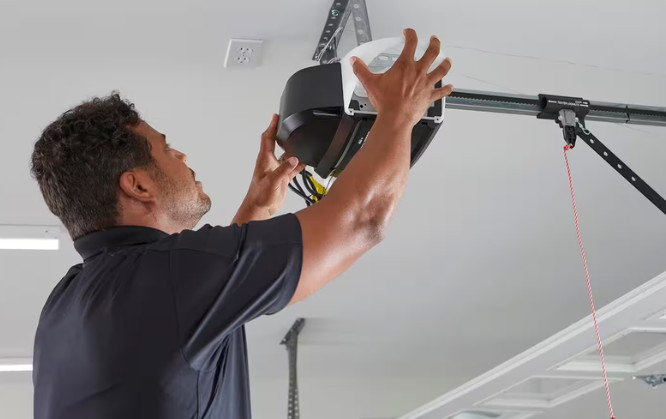
- What you hear tells you where to look: silence points to power or a lock, a running motor points to the trolley or gear, a loud bang points to a broken spring.
- The most common safe fixes are restoring power, disengaging a manual lock, and re-engaging the trolley after the emergency release was pulled.
- A door that feels very heavy or dropped fast almost always has a broken spring. Do not try to lift or repair it.
- Broken springs, snapped cables, and off-track doors are the three most dangerous stuck-door causes. All three are pro-only.
- In cold weather, the door can freeze to the concrete. Thaw it gently rather than forcing the opener.
- If your car is trapped inside and you cannot safely free the door, that is when it is worth calling for same-day service rather than forcing it.
1. The Opener Has No Power
If you press the button and absolutely nothing happens (no motor, no lights), the opener is not getting power. This is the simplest cause and worth ruling out before anything else.
Why Your Garage Door Opener Has No Power
- Confirm the opener is plugged in. Plugs vibrate loose more often than people expect.
- Test the outlet with a phone charger or lamp to see if it is live.
- Reset the GFCI outlet and check the breaker panel for a tripped breaker.
- If a storm just passed, unplug the opener for 30 seconds and plug it back in to reset it.
Call a pro if: the outlet is dead and resetting the breaker does not restore it, which is an electrical problem.
2. The Manual Lock Is Engaged
Many doors have a manual lock (a handle or a sliding bar that shoots a bolt into the track), and if it is engaged, the door physically cannot open, even though the opener strains. This catches people who rarely use the lock or just moved in.
How to Tell If Your Garage Door Is Manually Locked
- Look at the center or sides of the door for a turning handle or a horizontal lock bar.
- Check whether a bolt is extended into the track on one or both sides.
- Disengage the lock (turn the handle, slide the bar back) so the bolts retract.
- Try the door again.
Call a pro if: the lock is jammed or corroded and will not release.
3. The Trolley Is Disengaged (Emergency Release Was Pulled)
If the motor runs but the door does not move, the trolley has come disconnected from the opener carriage. Usually someone pulled the red emergency-release cord to open the door by hand and it was not re-engaged.
How to Re-Engage a Garage Door After the Emergency Release
- With the door fully closed, pull the red release cord toward the door to reset the lever.
- Run the opener once. The trolley should click back onto the carriage automatically.
- If it does not, move the door by hand until the trolley snaps back into the carriage.
Call a pro if: the trolley will not re-engage or the carriage is cracked or worn.
4. The Door Is Frozen to the Ground
In cold weather, the bottom weather seal can freeze to the concrete, and the opener reads the resistance as an obstruction and gives up. The door will not budge.
How to Free a Garage Door Frozen to the Floor
- Stop pressing the button. Repeated straining can strip the opener gear.
- Break the ice seal with a hair dryer or by carefully chipping the ice at the base.
- Once free, dry the seal and floor and apply a silicone-based lubricant to prevent it freezing again.
Call a pro if: the weather seal is torn or the opener stripped its gear from the strain.
5. A Torsion or Extension Spring Is Broken
If the door feels extremely heavy, will not lift, or the opener strains and stops a few inches up, a spring has broken. Springs counterbalance the full weight of the door, so when one snaps the opener cannot lift it. This is a common cause and a dangerous one to touch.
Signs of a Broken Garage Door Spring
- A loud bang from the garage, sometimes mistaken for a gunshot, when the spring snaps.
- A visible gap in the tightly-wound spring above the door.
- The opener hums or lifts the door a couple of inches then stops.
- The door is impossible to lift by hand, or crooked when you try.
Call a pro. Always. Do not attempt to unwind, adjust, or replace a spring. This repair has caused serious injuries and deaths. A technician has the tools and training to do it safely.
6. A Lift Cable Has Snapped or Frayed
The steel cables work with the springs to raise the door. If one snaps, the door can jam, hang crooked, or refuse to open. Like springs, cables are under high tension.
Signs of a Broken Garage Door Cable
- The door is crooked, with one side higher than the other.
- A cable is hanging loose, frayed, or wrapped incorrectly on the drum.
- The door binds or catches on one side as it moves.
Call a pro. Do not operate a door with a broken cable and do not try to replace it yourself. The tension can cause serious injury, and a crooked door can fall or jam worse.
7. The Door Has Come Off Track
A door that jumped its track will jam and stop, and it is unsafe to operate because it can fall. This often follows a car bump, a snapped cable, or badly worn rollers.
Why Your Garage Door Is Off Track and Stuck
- A roller has popped out of the track, so the door binds.
- A hard impact knocked a panel or the track out of alignment.
- Worn or seized rollers dragged the door out of position.
Call a pro. Do not force an off-track door open or closed. The panels are heavy and unstable, and forcing it can drop the door or bend it beyond repair.
8. The Opener Gear Is Stripped or the Logic Board Has Failed
If the opener hums or runs with the trolley engaged but the door does not move, the internal drive gear is likely stripped. If the opener is completely dead after you have confirmed power, the logic board may have failed. Both are common on older openers.
Signs Your Garage Door Opener Has Failed
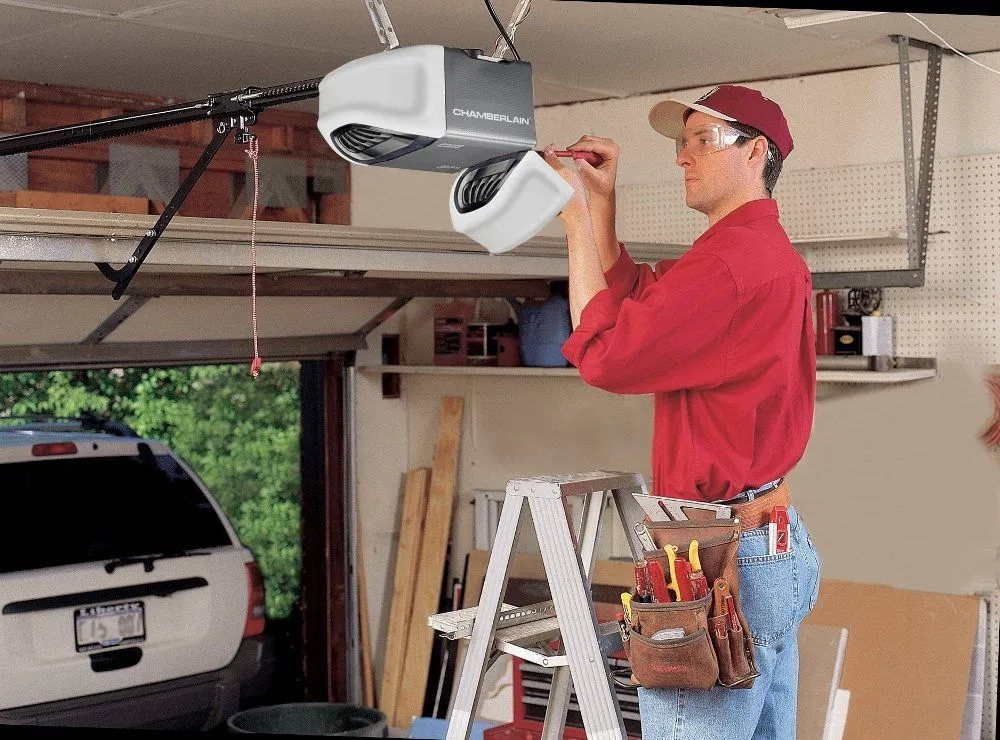
- A grinding or whirring motor with no door movement points to a stripped nylon gear.
- No response at all despite confirmed power points to a failed logic board.
- An opener more than 15 years old that fails repeatedly is usually near end of life.
Call a pro if: you suspect a stripped gear or a failed board. If your car is trapped inside and you cannot free the door, this is when same-day emergency garage door repair is worth the call. And if a frayed or snapped lift cable is part of the problem, add garage door cable repair to the job, since a technician can tell you whether a gear-kit repair is worth it or whether a new opener is the smarter spend.
DIY-Safe vs. Call-a-Pro: Quick Reference
Cause | Safe to DIY? | Why |
No power at the opener | ✅ Yes | Check plug, outlet, GFCI, breaker |
Manual lock engaged | ✅ Yes | Retract the lock bolt |
Trolley disengaged | ✅ Yes | Re-engage the emergency release |
Door frozen to the floor | ✅ Yes | Thaw gently, do not force the opener |
Broken spring | ❌ No | Extreme tension, high injury risk |
Snapped or frayed cable | ❌ No | Under tension, door can drop |
Off-track door | ❌ No | Heavy and unstable, can fall |
Stripped gear / failed logic board | ❌ No | Internal repair, needs diagnosis |
Bottom Line: Listen First, Then Choose Your Fix
The fastest way to figure out why your garage door is stuck is to listen when you press the button. Silence means power or a lock. A running motor means the trolley or the opener gear. A loud bang and a very heavy door mean a broken spring. The first four causes on this list are safe to check yourself in a few minutes. The last four (spring, cable, off-track, opener gear) are under tension or need diagnosis, and forcing them can turn a repair into an injury. When in doubt, stop and call a technician.
This guide expands on one item from our full troubleshooting resource. For the complete list, see the master guide: Why Won’t My Garage Door Work? 10 Most Common Reasons (and How to Fix Each One). If the door itself is fine and only the remote is failing, see Why Won’t My Garage Door Remote Work? 7 Things to Check Before You Call a Tech. And if the door closes partway then goes back up, see Why Does My Garage Door Reverse Before It Closes? 6 Common Causes.
If your door is stuck and you cannot safely free it, or you are looking at a spring, cable, or off-track door, Good Guys Garage Door Service can help fast. Book a same-day repair or request a free quote and we will get your door open safely.